
As the 21st Century enters its second decade, the plays of a hundred years earlier are attracting the eyes of the artistic directors of a number of New York theatres. Last week we had a hit from the 1906 season, Langdon Mitchell’s The New York Idea, the week before we had Oscar Wilde’s The Importance of being Earnest from the turn of the century, and now the Mint has favored us with Arnold Bennett’s What the Public Wants, which though it didn’t arrive on Broadway until 1922, was written and first staged in Britain in 1909. Next I suppose we’ll be getting Clyde Fitch’s The Girl Who Has Everything , a gem from the season of 1906.

The Mint Theatre, in its tiny 3rd floor black box on West 43rd Street, under the direction of Jonathan Bank, has been digging up unknown or little remembered vintage plays for the past several seasons, to the delight of its loyal subscribers. Hemingway’s The Fifth Column, A.A.Milne’s Mr.Pim Passes By, Susan Glaspell’s Alison’s House, Harley Granville-Barker’s The Voysey Inheritance, Dawn Powell’s Walking Down Broadway, Rose Franken’s Soldier’s Wife are just a small sampling of the varied neglected but worth-remembering writings of some of Broadway and the West End’s most noted playwrights of the last 150 years. Mr. Bank’s mandate is unique in New York and it’s always with relish that I visit to see what he’s cooked up for us this time.
Arnold Bennett, the current playwright whose work is on display, was a prolific novelist, playwright, poet, journalist who firmly believed in giving the public what it wanted, and in this sly satire in which he gives us a lively look at life behind the headlines of the daily press, he proves that the more things change the more they remain the same.
What the Public Wants, with its illuminating peek into the owner’s office of a vast publishing empire, confirms that. In 1909 Sir Charles Worgan in the play states: “I’ve only got one principle. Give the public what it wants”. In 2009 Rubert Murdoch said : “Media companies need to give people the news they want.” So there you have it; a perfectly valid subject for an influential and prolific author, and Arnold Bennett was surely one of those.
His plot revolves around Sir Charles Worgan, the millionaire publisher, whose views differ from those of his brothers John and Francis. Francis is a bon vivant who joins the publishing firm as drama critic as a lark, and John is a conservative bloke who finds brother Charles’ scandalmongering sheets disgusting. Arnold Bennett is clearly on Charles’ side, and succeeds in using comic devices to win us all over to his viewpoint. The one thing Charles wants that he hasn’t got is respect – he marries to try to find it, but ultimately learns to like himself as he is – the rugged individualist who has thoroughly enjoyed making a fortune by giving people what they want .
The first act of three is dazzlingly on target. As played by Rob Breckenridge and Marc Vietor, the two brothers verbally spar vibrantly, both actors embracing the long-winded metaphors and aphorisms that dot Bennett’s dialogue. Before the era of film and television, way before instant messaging and email, words were the weapon and these two fine actors fit comfortably into the jargon. They don’t proclaim, they merely speak, coloring the fancy phrases to give them variety and pungency. The play gets a little complicated in Act II when romance enters the picture, but one must remember that in those days it was felt necessary to have 2 ½ hours of story, two intermissions, at least two sets of scenery, lots of small roles (in this case there are 13 characters, though at the Mint they are played by only 8 actors, some doubling, and one tripling roles). The public expected a lot for its $2 ticket price.At the Mint poor Jeremy Lawrence plays three roles. As Mr. Lawrence has a most distinctive voice and physical appearance, when he appeared in Act III as a third character, he seemed to acknowledge how hard he was working with a look that said “Yes, that’s right folks, it’s me again!”
Matthew Arbour’s direction keeps things humming along, but the play didn’t need 135 minutes to make its point. The first act promised much, the next two acts delivered unevenly, and by final curtain we were all a little dazed by overkill. This one would have profited from an adaptation by the likes of David Ives, who does so well pruning the books to old musicals for our Encores! series. Arnold Bennett was not Bernard Shaw, and they were writing at the same time.
We don’t need a David Ives to tweak Shaw; I do think this piece by Bennett would profit by someone who knew how to help it lose some weight, gain some wit. Nevertheless, it’s my feeling that audiences enjoy seeing what kept people happy in another era – I know I do. And What the Public Wants is exactly the sort of work that reminds us how rich is our theatrical heritage, for it keeps us in touch with what interested those who came before us, and there is much in it to interest us as well. The Mint has courage and conviction, and I applaud it for that.
What the Public Wants plays thru March 13, 2011 at the Mint Theater, 311 W. 43rd St, NYC. Buy tickets.
———–
 Performer, agent, writer: among his many accomplishments, Richard Seff has written the book for Shine! The Horatio Alger Musical!, which debuted at the 2010 New York Musical Theatre Festival.
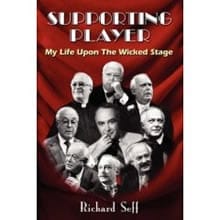
He is also author of Supporting Player: My Life Upon the Wicked Stage celebrating his lifetime on stage and behind the scenes, available through online booksellers, including Amazon.com.
- Richard Seff interviews Broadway luminaries:
- Carole Shelley
- Brian d’Arcy James
- Chita Rivera
- John Kander, With Complete Kander
Richard Seff chats with Joel Markowitz:
