
Age 19. I was getting off the plane from Kenyon College to be home for Thanksgiving Break. My dad had colon cancer, but I didn’t think it was serious. My mom picked me up, and before I could talk to her about how finals were going, she said, “Your father is going to die within two weeks. You should talk to him before he dies.” Three days later she woke me up after taking him to the hospital and said he wanted to have our final conversation the next morning. But I woke up the next day and he had died. I never got to talk to him.
Eight months later. Age 20. I was an intern at the Ojai Playwright’s Conference, where I saw Gideon Wabvuta’s Mbare Dreams, a one-man show about a family in Zimbabwe experiencing the change in power in the government. It was honest and vulnerable, and I realized I wanted to create art like that. As part of the internship, we wrote five-minute monologues. I began to write about my dad. I asked the question: What would I have talked to him about if we got to have that last conversation? Part of me lit up again- I realized I was both an actor and a writer, and I had a story to tell. I told myself I would write a one-woman show for him.
Age 22. I am a senior at Kenyon College and I am writing the full draft of the show. The show has progressed, and in it, I go back through all my past conversations with my dad. I perform it for a sold-out crowd. After, the professor who was mentoring me tells me to wait a full year, and then to rewrite the show top to bottom.
I graduated and waited a year as my mentor suggested. In that year, I went through depression spells that lasted longer than any before. I had a few bad experiences with some abusive directors, went through another particularly hard break up, and all the time was growing and discovering things about my dad and myself. I had to examine myself and decide what kind of artist I wanted to be. Around July 2018, I started to write again, but this time wrote a whole part of the play that was not in the initial draft. I started to write the conversation when I was 18 and came out as bisexual to my dad and then rewrote the rest of the show in the next few months. The show was completely different because I had changed in a year. My feelings towards my dad and myself had matured, and I was able to reflect those changes in the writing.
Age 23. I am debating whether or not to submit this show to Fringe. I had always loved the festival. In high school, my theater teacher introduced me to Fringe, and I spent summers volunteering with the festival. It was my dream to do work there. Last fall I was sitting at work listening to Dr. Blasey Ford’s testimony, and I couldn’t stop shaking. While I was furious at the outcome, I was shaking because of Dr. Ford’s bravery in revealing her truth and her vulnerability. I realized that this year, in 2019, I needed to produce my show. We are past the time of not sharing women’s and marginalized voices’ stories, and while the world can make us feel like we are alone in our experiences there is such strength in community and vulnerability. I knew if Dr. Ford could inspire me to produce this show, that perhaps my show could inspire another young artist to share theirs. I had to go with the momentum of change and truth for myself, but also for the world I wanted to see, and that which I wished my father could see.
[adsanity_rotating align=”aligncenter” time=”10″ group_id=”1455″ /]
Age 24. This is my story. It is the story of a daughter, an actress, a bisexual woman, and a four-year-old who wanted to be Cinderella when she grew up. It is the story of a survivor. It is my father’s story. The play is my darkest moments, but also my happiest.
I have taken on quite a task to produce this play by myself. Not only is its subject matter incredibly personal and vulnerable to me, but also I am 24 and have never produced before. I have learned I am much more resourceful, driven, and strong than I ever knew before. However, I am not doing this alone. I also have an incredible team supporting me.
Many of our first rehearsals were just conversations within the team about our stories, and those were some of my favorite moments in the process. The most important thing I have learned is the power and strength in community, that if we come together to share our stories- anything is possible. I’ve also learned that cold brew has some of the highest amounts of caffeine of any drink at Starbucks, and I can say this process has been fueled by it. Oh, and that there are funny moments in death and the ways we talk about it, and this play has a surprisingly large amount of comedy in it.
If I won a Tony for this show I would thank my dad. One of my heroes, Michelle McNamara, has a quote in her book “I’ll Be Gone in the Dark” that says something to the effect that no one would be more proud to read her book than her mother, but without her mother’s death, she could never have written the book.
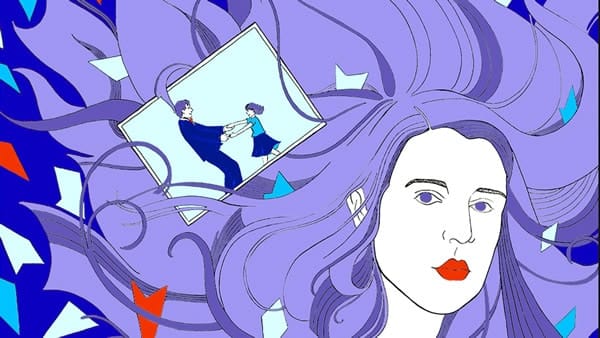
I feel that way about my father. I both wish he could see this show, but know the show would not exist had things not happened the way they did. I miss him every day, and this show is for him. I would also thank my mother and family who have supported me in this process and given me their blessing to take our intimate family story to the public stage. And I could not be here without my team, the director: Clancey Yovanovich; the stage manager: Julia Colpitts; the choreographer: Ian Edwards; the music arranger: Elizabeth Woolf; and the poster designer: Hannah Day Sweet. And thank you to everyone who has helped the process in the last four years, including the Ojai Playwrights Conference, Benjamin Viccellio, Amy Sheahan, and Megan Otto. And to the teachers that have made me the artist I am today: Kathryn Gately, Richard Poole, Kendra Holton, Joe Matyas, Loyd Williamson, Jon Tazewell, Balinda Craig-Quijada, and Kora Radella.
After the show is over, I hope the audience goes to their loved ones and has face-to-face conversations. I hope they see the importance of supporting young artists, especially younger women and marginalized voices. And I hope somewhere in the back of the audience is a young woman who realizes her story matters. That she is not alone, and that she just needs to pick up that pen and write.
Natasha Preston is an actress, playwright, and choreographer based in Washington DC. Her regional credits include work with TBD Immersive, LiveArt DC, Capital Fringe, Annapolis Shakespeare Company, and Maryland Ensemble Theater. Her New York credits include performing at the Brick Theater in Brooklyn with the In Scena Italian Theater Festival. She has completed internships with the Ojai Playwrights Conference, The Blank Theatre, and Skylight Theater in Los Angeles. She currently teaches playwriting with Acting for Young People and works in the administrative staff at Anacostia Playhouse. Training: Stella Adler Studio of Acting, Gately/Poole Studio of Acting, Studio Acting Conservatory, and Kenyon College. Her work can be found at natashapreston.net

Thank you for this.Your story and words matter lots. I have read and re-read filtered through my own life experiences. I lost both of my parents without with goodbye hugs and face-to-face words of love. Long ago, I graduated from college and immediately went to my mom’s hospital bed as she was dealing with leukemia. I showed her my diploma. She was so happy. She said we would talk more the next time. There was no next time, she died a few days later. I too was too late.
As for my father, I was far away working in another state. He passed at his own place of work. I had no chance to say how much he meant to me.
I carry both of my parents with me each moment of my life. I do what I can to tell my own daughter about them. You carry and write about your Dad with such deep love. Thank you.