
The Kennedy Center has long been known for producing renowned international celebrations by curating traditional and contemporary expressions of the performing arts. In recent years, the venue has given light to festivals highlighting China, Japan, the Arab World and India and now it has turned its attention to the Nordic region. From Feb. 19 to March 17, the Kennedy Center will present Nordic Cool 2013, a month-long international festival of theater, dance, music, visual arts, literature, design, cuisine, and film, highlighting the diverse cultures of Denmark, Finland, Iceland, Norway, and Sweden as well as the territories of Greenland, the Faroe Islands, and Áland Islands.
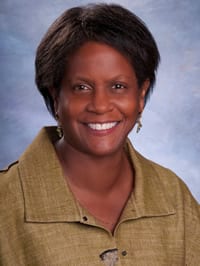
“In conversations with many colleagues in the arts and others, it became obvious that Americans are not as aware of Northern Europe and particularly the Nordic countries as they are of other countries then hence the arts and culture,” Alicia Adams, VP of International Programming for the Kennedy Center and curator of the festival, says.
“Many people are unaware of what countries comprise the Nordic countries so this will be an opportunity to offer clarification through the festival presentations. The Nordic region is way beyond the Vikings though they share that common heritage.”
The Nordic region is a part of Europe that has been largely forgotten in the arts world, aside from the occasional classical music performance. This festival will highlight the Nordic countries through visual art exhibits, theatre performances on nine stages, special panels, film screenings and literature from the region.
Even the cuisine in the café and restaurant will reflect the culture of the festival. “The goal is to reflect the art and culture of this region in a way that is almost as effective as traveling there,” Adams says.
“This Festival explores the interplay of themes central to Nordic life, such as nature, technological innovation, environmental sustainability, entrepreneurial spirit, and youth culture. It will enlighten.” To create the most substantial representation possible, Adams traveled with co-curator Gilda Almeida to the region eight times for planning purposes.
Their goal was simple: Find high quality art that would represent the culture of the Nordic countries and offer something fresh and exciting to the Kennedy Center audience. The visits included stepping foot in some of the most celebrated and elaborate venues in the Nordic countries—from walking down the sloping roof of the Opera House in Oslo all the way to the sea, to watching a performance in the brand-new Opera House in Reykjavik.
Additionally, Adams and Almeida spent time dining at globally revered restaurants in Copenhagen, boating between icebergs in Nuuk and wandering among 60,000 sheep in the Faroe Islands.
“Whether attending a performance at Sweden’s Royal Dramatic Theatre (where Ingmar Bergman once presided), marveling at the exhibitions in the Nobel Prize Museum, or touring the National Design Museum in Helsinki (and being excited and surprised at seeing objects from my personal collection on exhibit there), I began to form ideas and a picture of the remarkable cultural wealth these countries all possess,” Adams says.

“The impact of the region’s long, dark and cold winters (sometimes brightened by the amazing light of the aurora borealis); the sounds of the surrounding sea; the long horizon; the midnight sun in summer. All of these elements create a unique environment in northern Europe. They all comprise a landscape and natural world that is truly breathtaking.”
The plays that will be featured are not only making their DC debuts, but many will be making their U.S. premieres. Those being performed on the a U.S. stage for the first time are: Bird in Magic Rain with Tears by Norway’s Winter Guests, August by Denmark’s TEATRET, Hedda Gabler by Norway’s National Theatre, The Warmblooded by Finland’s Tampere Workers’ Theatre, and Fanny and Alexander by Sweden’s Royal Dramatic Theatre.

Starting things off on the Eisenhower Stage will be an acclaimed production of Kafka’s classic Metamorphosis by Icelandic theater collective Vesturport and the Lyric Hammersmith, scheduled from Feb. 20-22. The play boasts daring aerial action on a split-level set that is designed to amaze. Norwegian theater artist Alan Lucien Oyen and his company.
Winter Guests present Bird in Magic Rain with Tears in the Terrace Theater on Feb. 20 and 21. The multimedia play tells the story of three lost souls: a conceptual artist grieving over her son’s death, a boy-prostitute searching for the truth about his past, and a terminally ill businessman longing for love, all told with two revolving walls, juxtaposing their interactions with live video and using smartphones and laptops as the only props.
Award-winning Danish theater company Gruppe 38 honors its countryman Hans Christian Andersen with Hans Christian, You Must be an Angel, set for the Family Theater Feb. 23 and 24. The play utilizes a long table filled with the author’s famous fairy tale characters and the audience is invited to watch the table come to life.
Other plays being staged include TEATRET’s theater company’s version of August, which was the Terrace Theater Winner of the 2007 “Best Show” Reumert Award, Denmark’s foremost recognition in the performing arts, from Feb. 23-24; Norway’s National Theatre’s production of Henrik Ibsen’s classic play Hedda Gabler, running Feb. 26-27 at the Eisenhower Theater; Teatret Gruppe 38’s A Sonatina, staged at the Family Theater March 2-3; Tampere Workers’ Theatre’s The Warmblooded out of Finland, playing March 2-3 at the Eisenhower Theater; Royal Dramatic Theatre’s Fanny and Alexander out of Sweden, playing the Eisenhower Theater from March 7-9; and Backa Teater’s Little King Mattias out of Sweden, staged at the Family Theater March 9-10.
With so many performance artists headed to the area, you would think it would be a logistical nightmare, after all, 15 cargo containers are being transported to DC with equipment and materials, 2,567 hotel room nights needed to be booked for the more than 700 artists, and 460 flights needed to be tracked.
Thanks to the hard work of 350 volunteers through Friends of the Kennedy Center and the different Nordic Embassies in DC helping with translation and communication, the accommodation process was as smooth as the ice the Nords are famous for.
Adams offers that none of the companies was particularly challenging to import to the states—the fact that many of those coming spoke English helped—but there was one exhibit that presented somewhat of a tough test.
“For the ‘Are we Still Afloat’ exhibit we collected 1,000 shirts,” she says. “Collecting the shirts, fireproofing them and organizing them by color required a number of volunteers and organization.”
Following the performances, most companies will head back to their home country, but several of the dance companies will continue on to play at the Joyce Theater in New York City.
In addition to the performing and visual arts, the festival will include a number of other presentations native to the Nordic lands. The most anticipated one comes from innovative Danish lighting designer Jesper Kongshaug, who will recreate the effect of the Northern Lights on all four sides of the Kennedy Center’s façade from 5:30 to 11 p.m. for the duration of the festival, creating the mesmerizing illusion of the famed aurora borealis.
Other interesting installations include an interactive Lego exhibition for children and exhibitions highlighting the design of the region and Nordic values, such as nature and the environment, and at 1 p.m. on March 2, a knitting demonstration by award winning designer Steinunn Sigurd will be held in the Grand Foyer.
There will also be a special section designed for children featuring play stations, and interactive games since companies from the Nordic region are responsible for many of the most popular titles in mobile gaming today.
“Perhaps more so than any other international festival we’ve created, Nordic Cool 2013 manifests the intersection of life and nature, art and culture,” Adams says. “Appreciation of and respect for the natural environment are reflected throughout the Nordic countries—and they’re deeply rooted in the arts there, too.”
